Orthopaedic physiotherapy supports the treatment of musculoskeletal conditions - hip and elbow dysplasia, degenerative joint disease, cruciate ligament rupture, fractures and orthopaedic surgery. Its goals are to reduce pain, rebuild strength and range of motion, and return the patient to full, safe activity - or, in chronic disease, to preserve mobility at the best possible level.
It starts with assessment
Every programme begins with an orthopaedic and functional assessment. Only then do we choose methods matched to the diagnosis, age and condition of the animal - and we adjust the plan as the patient progresses.
Why we combine INDIBA with the underwater treadmill
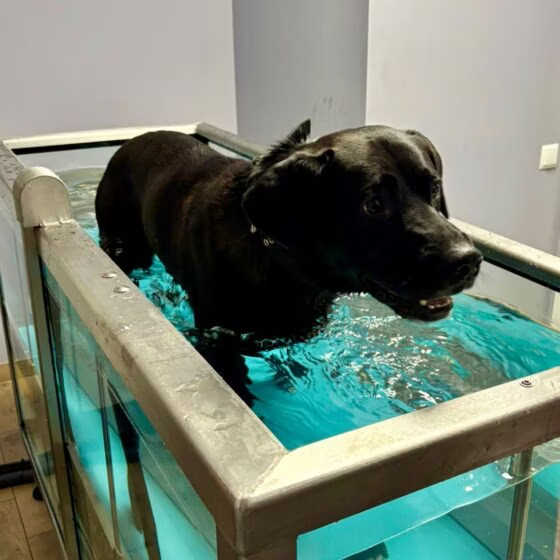
The best results come from combining methods. INDIBA therapy prepares the tissues - easing pain and improving blood supply - so the patient exercises more willingly and effectively. The underwater treadmill then builds gait and muscle strength with the joints safely relieved by water. Manual therapy and active exercises complete the programme.
- less pain and swelling at the start of therapy,
- a faster return to a symmetrical, correct gait,
- lower risk of compensation and secondary overload.
Dysplasia - why early support matters
In young dogs with diagnosed dysplasia, sensible exercise and strict weight control can markedly improve comfort - whether or not surgery is planned. Strong muscles stabilise an imperfect joint, so it is not worth waiting until the dog visibly limps.
The owner's role
- keeping a lean body condition - the single best joint protection,
- regular moderate exercise instead of sudden bursts,
- non-slip mats and fewer jumps at home,
- doing the prescribed exercises between visits.
If your dog limps, is recovering after orthopaedic surgery or has dysplasia, book a consultation at MultiVet in Lutynia near Wrocław - we will design an orthopaedic physiotherapy programme for your pet.