
Pet microchipping
A microchip is the most reliable way for a lost pet to find its way safely home. At the MultiVet clinic in Lutynia near Wrocław we place the microchip quickly and almost painlessly, then register your pet in the identification database.
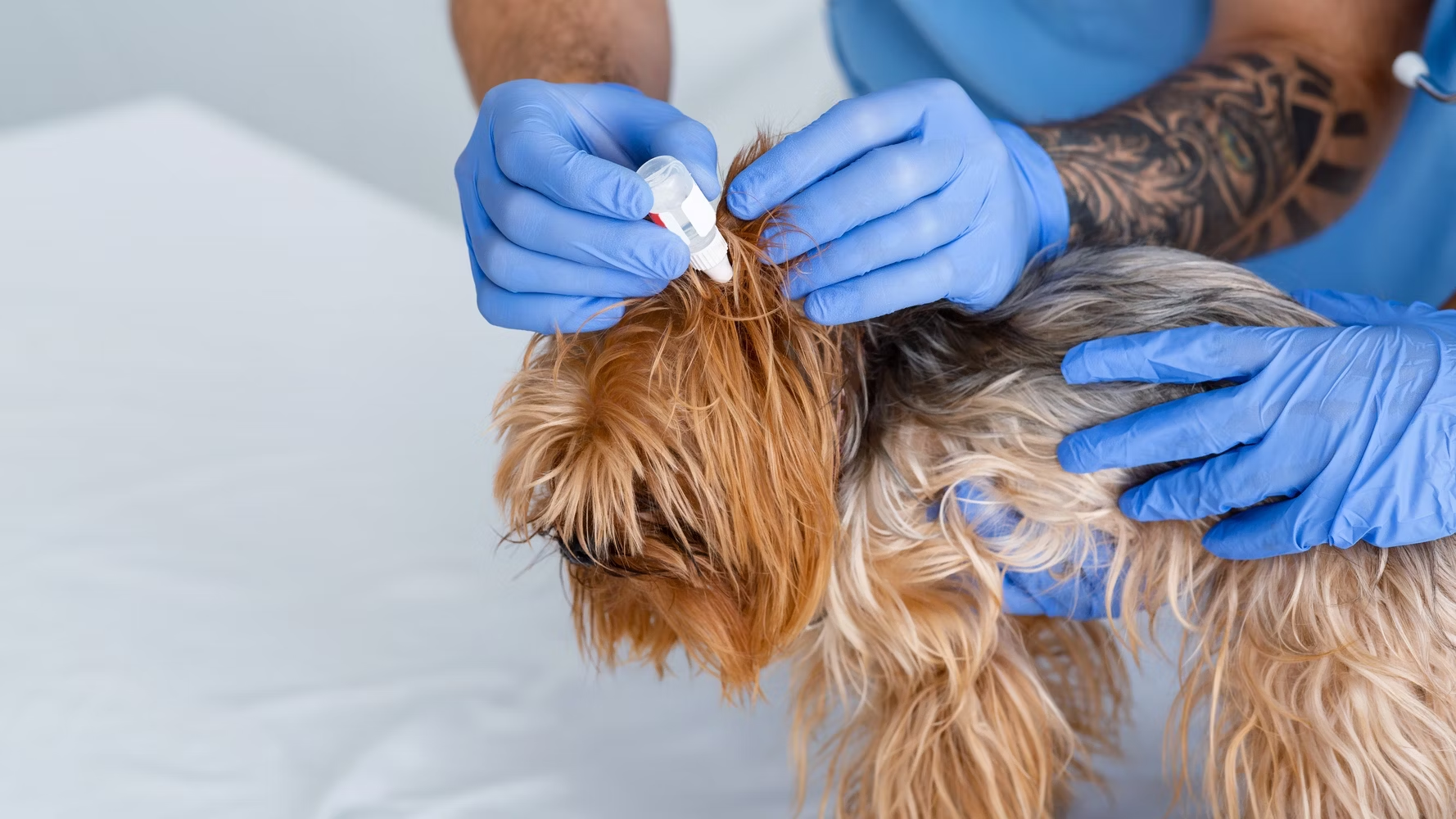
Why microchip your pet?
- A quick way home - a lost animal can be identified and its owner contacted.
- Permanent identification - the microchip lasts a lifetime and cannot be lost.
- Required for foreign travel - a microchip is necessary for a pet passport.
- A simple procedure - placement takes a moment and is virtually painless.
How it works
Microchip placement
The tiny chip is inserted under the skin, usually at the neck.
Reading and verification
We confirm the chip number with a scanner.
Database registration
Your pet's and your details are entered into the identification database.
Keep your pet safe
Book a microchipping appointment at the MultiVet clinic in Lutynia.
Why the chip alone is not enough
A microchip is a passive transponder the size of a grain of rice. It stores a fifteen-digit number and nothing else - no address, no phone number, no medical history. Everything useful happens in the database that links that number to you. An animal with a chip that was never registered, or registered to a phone number changed three years ago, is in practice an animal without identification.
This matters more in the countryside than in the city. A dog that slips through a gate here does not stay on one street; it crosses fields and can be found several villages away by somebody who has no idea where it came from. The number read by a scanner at any clinic is the only thing that closes that distance.
How the procedure looks
The chip is implanted under the skin, usually on the left side of the neck, with a single injection. No anaesthesia is needed and most animals react as they would to a routine vaccination. We scan immediately afterwards to confirm the transponder reads correctly, and again at every later visit - transponders occasionally migrate slightly and very rarely fail.
Registration is done in a national database. Keep the certificate; you will need the number when travelling, when insuring the animal and whenever ownership changes.
If you have moved to Poland with an animal
Animals microchipped elsewhere in the European Union do not need a second chip. The existing number is valid, but it should be registered in a Polish database as well, with your current address and phone number, otherwise a Polish scanner will read a number that leads nowhere locally. Bring the passport or the previous registration document and we will help you sort it out during a normal appointment.
Non-EU chips are occasionally of a standard that older scanners cannot read. If your animal was chipped outside Europe, tell us in advance so we can check with the right equipment before assuming the chip is missing.
Booking and practical details
Microchipping takes a few minutes and is usually combined with another appointment - a vaccination, a health check or passport paperwork. Call +48 533 557 247 or use the online booking system; if you prefer to write first, e-mail kontakt@multivetlutynia.pl.
We are at ul. Kościuszki 61 in Lutynia, in the Miękinia municipality, about 18 km from Wrocław. Opening hours are Monday to Friday 10:00-20:00 and Saturday 10:00-15:00, Sunday closed. Parking in front of the clinic is free.
We see dogs, cats, rodents, rabbits and ornamental birds. Horses are covered for rehabilitation only. We do not treat farm animals.
If your animal has gone missing, have the chip number ready when you contact shelters and clinics in the area. A description of a black cat is of little use in a region full of black cats; a fifteen-digit number is unambiguous, and any clinic with a scanner can confirm a match in seconds.
Worth reading before your visit
A pet that bolts into the fields is easier to recover thanks to microchipping and database registration.
If this is your first vet visit, it helps to know what to bring.
Routine worming and parasite protection matters even more in rural areas.