INDIBA therapy for animals
INDIBA Animal Health is a non-invasive technology that supports the body's natural tissue-repair processes. At the MultiVet clinic in Lutynia near Wrocław we use it for muscle and joint complaints, tendon and ligament problems, and recovery after surgery.
How does INDIBA therapy work?
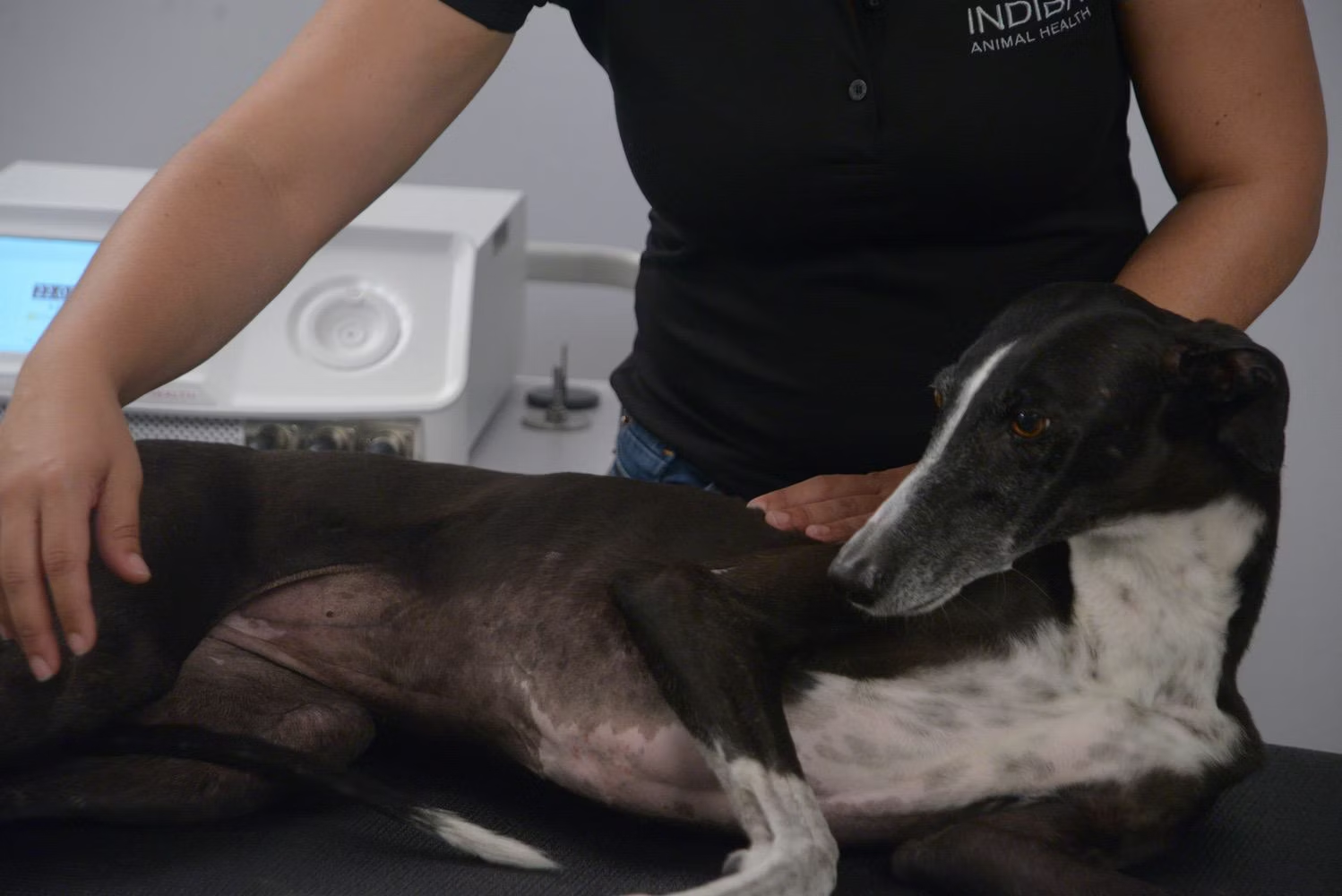
INDIBA Animal Health uses a fixed frequency of 448 kHz (the Proionic® System). In a controlled way it stimulates microcirculation, ionic exchange and cellular metabolism. In practice this means better oxygenation and nutrition of the tissues, faster drainage of swelling, and less tension and pain.
Depending on the stage of the problem we work athermally or with a controlled thermal effect. This allows the therapy to support the patient's comfort, tissue function and recovery.
Fixed 448 kHz frequency
The patented Proionic® System with documented effects.
Athermal or thermal mode
Parameters matched to the stage of the problem and tissue response.
Patient comfort
A non-invasive treatment, usually very well tolerated by animals.
When to consider INDIBA therapy
Therapy is always planned on the basis of a veterinary assessment and the goal of rehabilitation.
Muscle and joint complaints
Support for pain, tension and overload of the musculoskeletal system.
Tendon and ligament problems
Help with tissue regeneration after injuries and strain.
Post-operative recovery
Support for anti-swelling processes and healing around surgery.
Working with swelling
Supporting drainage and the reduction of tissue oedema.
Scar tissue
Supporting the elasticity and function of scars and adhesions.
Part of rehabilitation
Often one element of a recovery plan with manual therapy and exercise.
INDIBA - frequently asked questions
Can INDIBA be combined with other rehabilitation?+
Yes - it is often part of a recovery plan, for example alongside manual therapy and exercise, as indicated.
Is a qualification visit required?+
Yes - assessment is compulsory. As with any physical therapy there are contraindications, so treatments follow an examination at the clinic.
Does my pet need sedation?+
Usually not; what matters is a calm patient and a comfortable setting. The therapy is non-invasive and parameters are adjusted to the patient's response.
How many sessions are needed?+
The number and frequency of sessions are tailored individually to the patient's response and the goal of rehabilitation.
Book an INDIBA assessment
Contact the MultiVet clinic in Lutynia to plan a therapy programme tailored to your pet.
What the therapy does
INDIBA is a radiofrequency therapy. A current at 448 kHz passes through the tissue and raises its temperature from the inside rather than from the surface, which increases local circulation and changes the behaviour of the cell membrane. In practice that means better perfusion of the treated area, reduced muscle tension and, in many patients, noticeably less pain during the sessions that follow.
Unlike a heat pack, the effect is not limited to the first centimetre under the skin. That is why the method is used on deep structures - hip musculature, the lumbar region, tendons that sit under a layer of tissue no external warmth would reach.
Where it fits in a rehabilitation plan
The therapy is rarely used on its own. It is most often applied before manual therapy or controlled exercise, because tissue that is warm and better perfused tolerates movement more readily, and the session that follows achieves more. In post-operative patients it is introduced once the surgeon confirms the wound is healed.
Typical indications are chronic musculoskeletal pain, recovery after orthopaedic surgery, muscle tension secondary to compensation, and soft-tissue injury in active dogs. As with all rehabilitation, the response varies between patients and we assess it rather than assume it.
What the animal experiences
Sessions are quiet and non-invasive. The animal lies or stands while the applicator is moved over the treated area; most patients relax within a few minutes, and many fall asleep. No sedation is used. The sensation is a gentle warmth, and the intensity is kept within a range the patient accepts.
A course usually consists of several sessions spaced over two to three weeks, after which we reassess. If nothing has changed, we say so and change the plan rather than extending the course indefinitely.
Practical details
Sessions last around twenty to thirty minutes depending on the area treated. A long-coated animal may have a small area clipped for good contact, and we will tell you before doing it.
The clinic is at ul. Kościuszki 61 in Lutynia, in the Miękinia municipality, about 18 km west of Wrocław. Parking along the street is free, with no paid zone. We are open Monday to Friday 10:00-20:00 and Saturday 10:00-15:00; Sunday is closed, which is worth planning around if you are driving in from further away.
Book by phone on +48 533 557 247 or through the online system. If writing is easier than speaking, e-mail kontakt@multivetlutynia.pl with a short description of the problem and a preferred day.
We see dogs, cats, rodents, rabbits and ornamental birds. Horses are covered for rehabilitation only. We do not treat farm animals.
Worth reading before your visit
For deep tissue work we use radiofrequency - see how INDIBA therapy works.
Sudden back pain and weak hind legs point to intervertebral disc disease.
The methods used after joint surgery are described under orthopaedic physiotherapy.