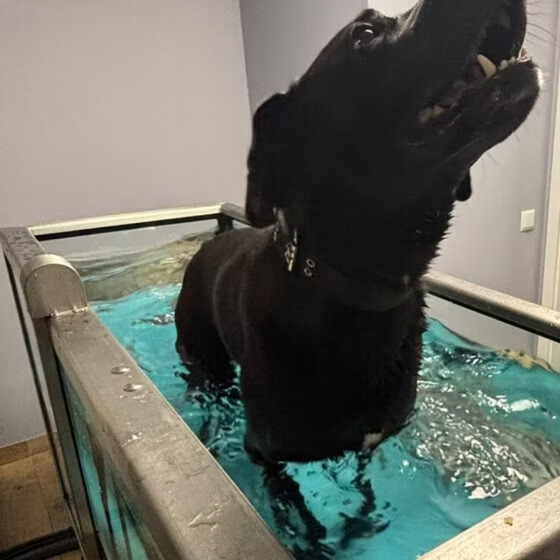
The underwater treadmill is one of the most effective tools of modern veterinary rehabilitation. Thanks to the buoyancy of water, a dog can exercise with much less load on its joints - with less pain and a lower risk of strain - while working its muscles intensively. In this guide we explain how hydrotherapy works and who benefits most.
How does training in water work?
The dog walks on a belt inside a glass chamber filled with warm water. The water level, belt speed and session time are set individually. Water acts as natural weight relief: the higher the level, the less pressure on the joints - and at the same time the resistance for the working muscles increases. Warm water additionally relaxes the tissues and improves comfort.
Who benefits from hydrotherapy
- dogs recovering after orthopaedic and neurological surgery,
- patients with degenerative joint disease and dysplasia,
- overweight dogs that need exercise without joint strain,
- sporting and working dogs in conditioning training,
- seniors, to maintain muscle mass and mobility.
What a session looks like
The first visit is usually a short adaptation - we let the dog get used to the equipment, and sessions are gradually extended. The therapist assists the patient throughout, watching posture and safety. For many dogs the treadmill quickly becomes an enjoyable form of exercise.
Frequently asked questions
Does my dog need to be able to swim? No - on the treadmill the dog walks on a belt rather than swimming, so hydrotherapy also suits dogs that are not keen on water.
How many sessions are needed? It depends on the goal of therapy. We set the plan individually after assessment and adjust it as the patient progresses.
Hydrotherapy gives the best results combined with rehabilitation and INDIBA therapy. You are welcome at the MultiVet clinic in Lutynia - we see dogs from Lutynia, Miękinia, Środa Śląska and the whole Wrocław area.