
Pet passports
Planning to travel abroad with your pet? At the MultiVet clinic in Lutynia near Wrocław we issue passports for dogs, cats and ferrets, and help you complete all the formalities required for travel within the European Union.
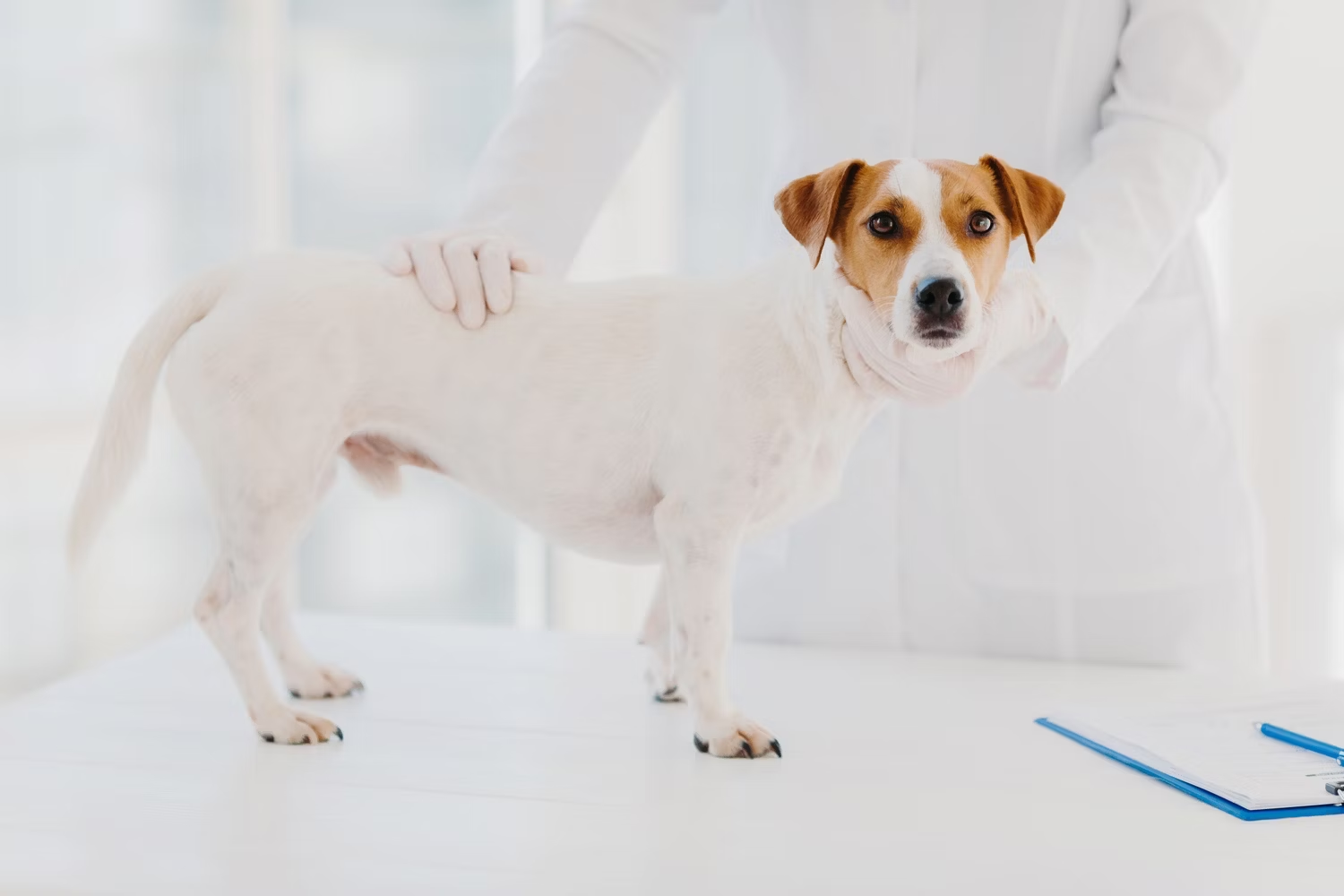
What is needed for a passport?
For an animal to travel within the EU, several requirements must be met. We will guide you through the whole process step by step.
Microchip
Permanent identification - a prerequisite for issuing a passport.
Rabies vaccination
An up-to-date vaccination is the basic requirement for foreign travel.
Issuing the passport
We issue the passport and record the required details and vaccinations.
Requirements vary by destination country (some additionally require an antibody titre test or worming within a set time before travel). Contact us in advance - we will help plan the timeline so everything is ready on time.
Travelling with your pet?
Book a visit at the MultiVet clinic in Lutynia and prepare your pet for a stress-free journey.
Travelling in and out of Poland with an animal
An EU pet passport is a document issued by an authorised veterinarian that records the animal identity, its microchip number and its rabies vaccination history. Once issued it stays with the animal for life; only the vaccination entries are updated. For travel within the European Union the combination of a valid rabies vaccination, a readable microchip and a correctly filled passport is normally what you need.
The order of steps matters and is the most common reason people are turned back. The microchip must be implanted or read before the rabies vaccination is given. A vaccination administered before identification does not count, and the waiting period starts again from the date of the next valid dose.
Timing
Rabies vaccination becomes valid after a waiting period counted from the day of administration, so a passport issued the week before a flight is of no use. Plan the paperwork at least a month ahead, and considerably earlier for destinations outside the European Union, where a blood test, additional treatments or an official health certificate may be required depending on the country.
Requirements outside the EU differ from one destination to another and change over time. We will tell you what is needed for the routine cases we see regularly, and where the rules are unclear we will say so rather than guess - the authority to check with is always the destination country.
If you are moving to Poland
Animals arriving with a valid EU passport do not need a new document. What is worth doing is registering the existing microchip number in a Polish database and adding a local clinic to your records, so that a scanner in this country returns something useful. We can also transfer the vaccination history into a form recognised here during an ordinary appointment.
Passports from outside the EU are not interchangeable with the European document. In that case a new EU passport is issued once the identification and vaccination requirements are met.
Practical details
Bring the animal, the current passport or vaccination record and, if you have one, the microchip registration certificate. Passport paperwork is done during a normal appointment, so it can be combined with a health check or a booster.
The clinic is at ul. Kościuszki 61 in Lutynia, in the Miękinia municipality, about 18 km west of Wrocław. Parking along the street is free, with no paid zone. We are open Monday to Friday 10:00-20:00 and Saturday 10:00-15:00; Sunday is closed, which is worth planning around if you are driving in from further away.
Book by phone on +48 533 557 247 or through the online system. If writing is easier than speaking, e-mail kontakt@multivetlutynia.pl with a short description of the problem and a preferred day.
We see dogs, cats, rodents, rabbits and ornamental birds. Horses are covered for rehabilitation only. We do not treat farm animals.
Worth reading before your visit
Before you go, check the requirements for travelling abroad with a pet.
A pet that bolts into the fields is easier to recover thanks to microchipping and database registration.
Dose timing for young dogs is set out in the puppy vaccination schedule.