Animal rehabilitation in Lutynia
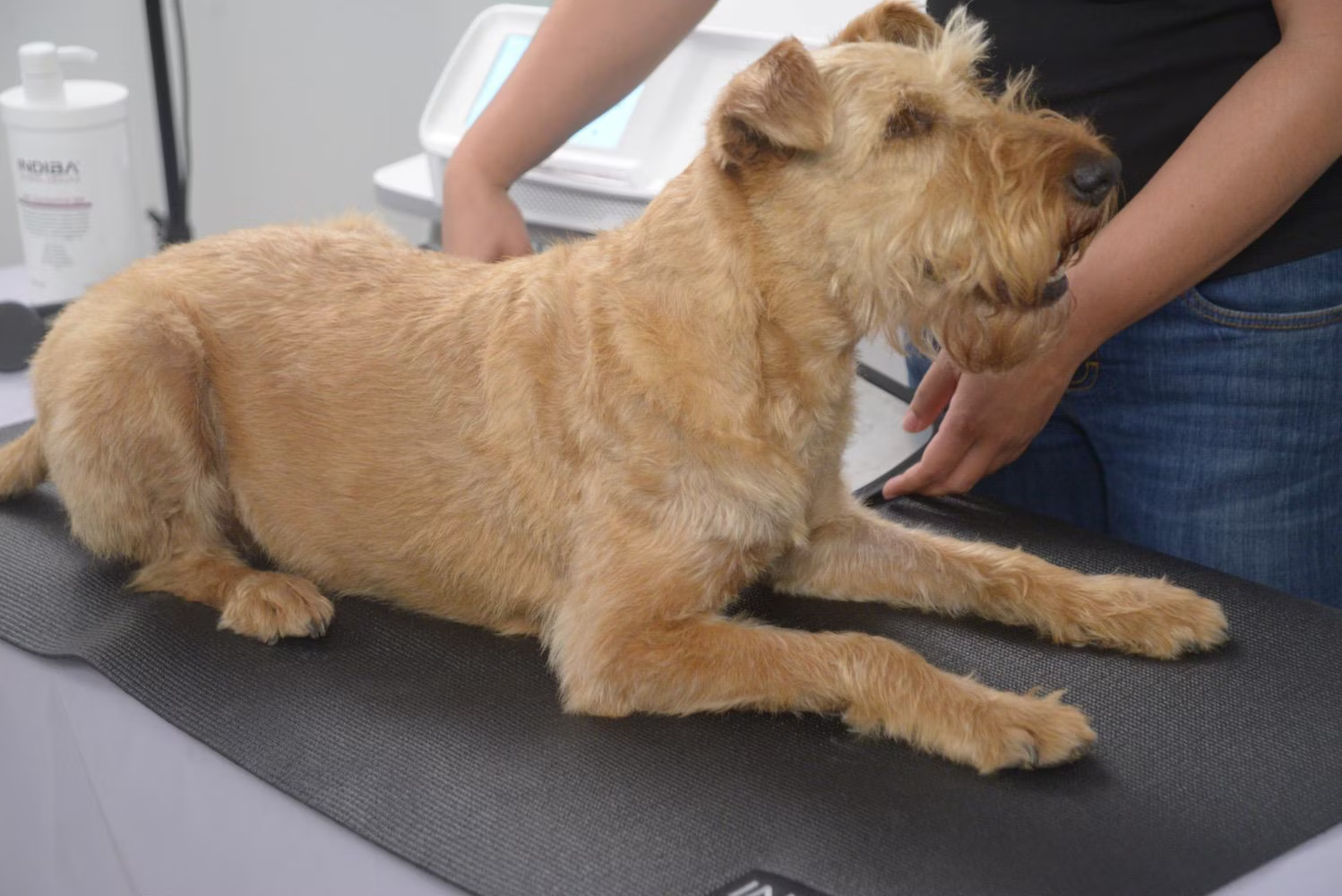
We help pets return to full fitness after injuries and operations, and manage chronic conditions of the musculoskeletal system. We combine the underwater treadmill, INDIBA therapy, manual therapy and exercise into one individually tailored recovery plan.
Complete recovery care in one place
Veterinary rehabilitation is much more than a single treatment. It is a considered process in which physical therapies are combined with movement, manual work and owner education. Every plan starts with a functional assessment, and its course is adjusted to how the tissues respond and how the patient progresses.


Who is rehabilitation for?
Animals of every age benefit from rehabilitation - from young patients to seniors.
After orthopaedic surgery
After operations on joints, ligaments (e.g. cruciate ligament rupture) and bones.
Neurological conditions
Support for paresis and spinal problems (e.g. disc disease).
Degenerative disease
Better quality of life with arthritis and chronic joint pain.
Weight and fitness
Safe training that supports weight loss and muscle building.
Senior patients
Keeping older dogs and cats fit and mobile.
Active and sporting dogs
Injury prevention and faster recovery after exertion.
How rehabilitation works
Functional assessment
Examination, history and setting the goal of therapy.
Therapy plan
Choice of methods: treadmill, INDIBA, exercise.
Sessions and monitoring
Regular treatments and progress reviews.
Home exercises
Guidance and a plan to maintain the results.
Book a rehabilitation consultation
We will help choose a recovery programme suited to your pet's needs.
Who physiotherapy is for
Rehabilitation is not only for animals recovering from an operation. It applies to a dog with a chronic limp that has been quietly getting worse, to a cat that has stopped jumping onto the windowsill, to a patient after spinal injury, and to an overweight animal that needs to move without loading its joints. What these cases share is a functional problem: something the animal used to do and no longer does comfortably.
Every plan starts with an assessment. We watch the animal move, examine the joints and muscle mass, look for pain and compensation, and agree with you what the realistic goal is - full return to activity, or comfort and independence in daily life. Those are different plans.
Methods
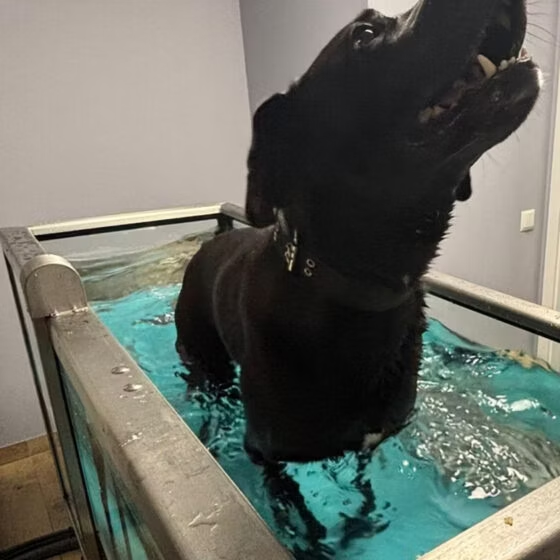
Depending on the diagnosis we combine manual therapy, controlled exercise, hydrotherapy on the underwater treadmill, laser therapy and radiofrequency. Sessions are short and frequent rather than long and rare, because tissue responds to repeated moderate load, not to one heroic effort per month.
Progress is measured, not felt. We record the parameters relevant to the case at the start and re-check them, so that a plan that is not working can be changed early instead of continued out of habit.
Species we treat
Dogs and cats make up most of the caseload. Horses are also covered by our rehabilitation service, and this is the one area in which we work with them - all other equine veterinary care is outside our scope. The underwater treadmill in the clinic is designed for dogs and is not used for horses.
Working with your regular veterinarian
Many patients are referred to us by the surgeon or internist who is already treating them, and we are happy to keep that clinician informed. If your animal was operated on elsewhere, including abroad, bring the surgical report and any imaging - the technique used determines how early load can be introduced.
Practical details
Sessions are booked in series rather than one at a time, and the frequency is agreed after the first assessment. Bring a non-slip harness if your dog uses one, and allow extra time for the first appointment.
The clinic is at ul. Kościuszki 61 in Lutynia, in the Miękinia municipality, about 18 km west of Wrocław. Parking along the street is free, with no paid zone. We are open Monday to Friday 10:00-20:00 and Saturday 10:00-15:00; Sunday is closed, which is worth planning around if you are driving in from further away.
Book by phone on +48 533 557 247 or through the online system. If writing is easier than speaking, e-mail kontakt@multivetlutynia.pl with a short description of the problem and a preferred day.
We see dogs, cats, rodents, rabbits and ornamental birds. Horses are covered for rehabilitation only. We do not treat farm animals.
Worth reading before your visit
The recovery timeline is covered in our text on dog rehabilitation after surgery.
The methods used after joint surgery are described under orthopaedic physiotherapy.
After spinal injury or surgery we run neurological rehabilitation.