
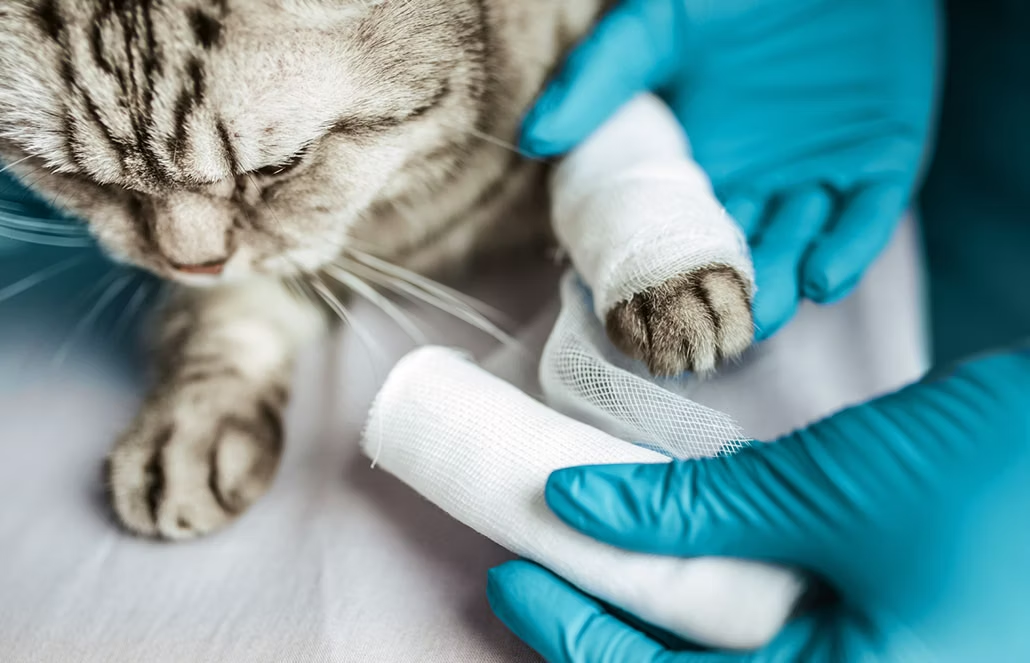
Animals instinctively hide pain - in the wild, showing weakness meant danger. That is why owners often do not realise their pet is suffering until the problem is advanced. Learning to read the subtle signals of pain is one of the most valuable skills a responsible owner can have.
Signals of pain in dogs
- reluctance to move, jump or climb stairs,
- stiffness, limping, a changed posture,
- irritability or growling when touched in certain places,
- licking or chewing one area of the body,
- changed appetite, restlessness, panting without exertion.
Signals of pain in cats
- hiding, withdrawal, reduced activity,
- neglected grooming - or over-grooming of one spot,
- avoiding jumps, changed litter tray habits,
- squinted eyes, a hunched posture,
- aggression or irritability when handled.
How we assess and treat pain
Because the patient cannot tell us what hurts, we rely on a careful history and examination - posture, gait, reaction to touch - supported where needed by imaging (X-ray, ultrasound) and laboratory tests, so we treat the cause rather than mask it. Treatment may include pain medication, therapy of the underlying disease, and - for musculoskeletal pain - rehabilitation, INDIBA therapy and the underwater treadmill.
Never give human painkillers
This matters enormously: many human pain medicines are toxic to dogs and cats - paracetamol and ibuprofen among them - and can be life-threatening. Never medicate on your own. If you see any of the signals above, book a visit at MultiVet in Lutynia near Wrocław: effectively treated pain genuinely transforms an animal's quality of life.