
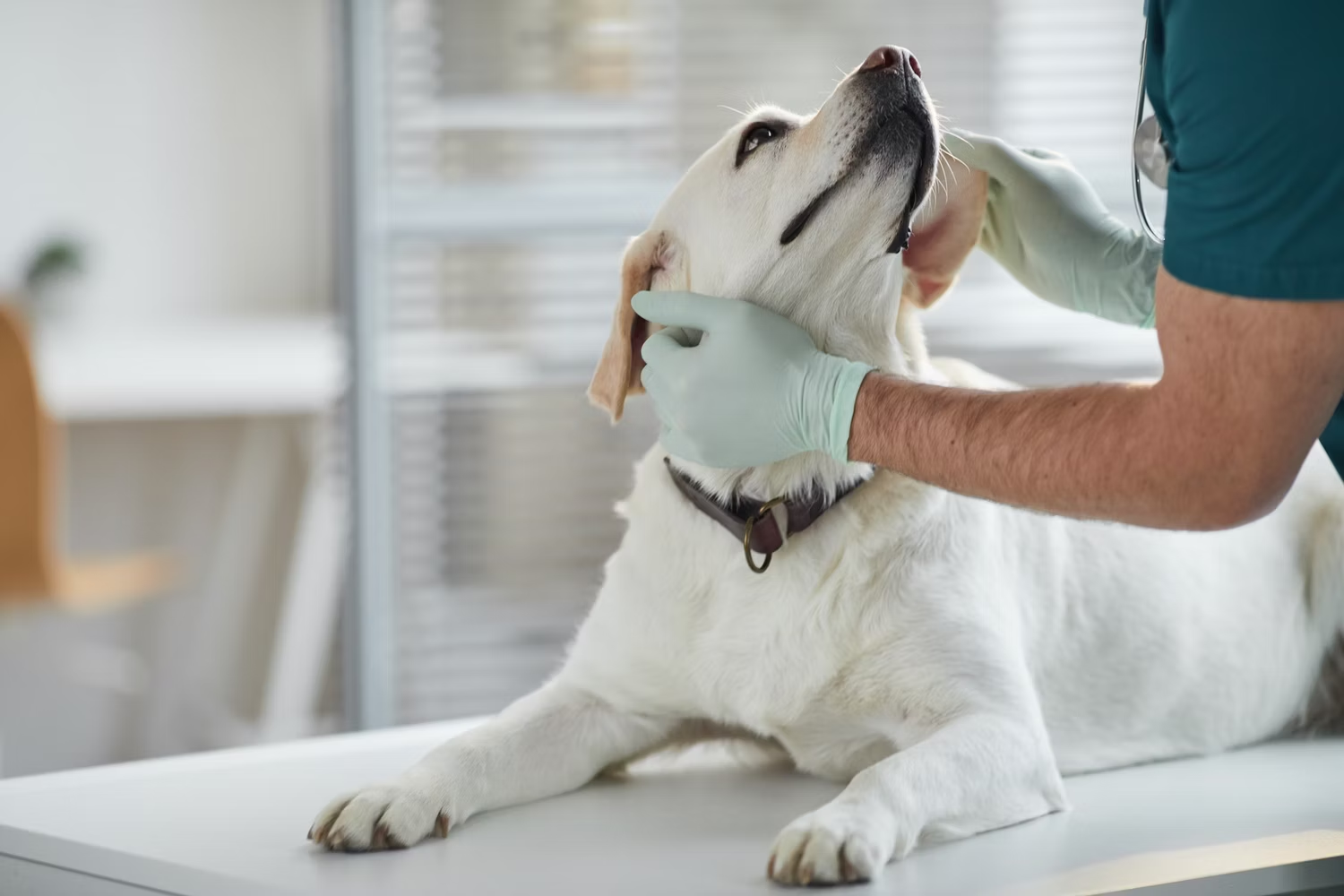
You can clean the tartar off the teeth and call the procedure a success - and still miss serious disease. Why? Because most changes happen under the gum, out of sight. That is why dental X-rays are now the standard of proper veterinary dentistry.
What you cannot see with the naked eye
It is estimated that up to 60% of significant changes in the mouth are invisible on a simple look. Tooth roots, the surrounding bone, resorption lesions, abscesses and root fractures all hide beneath the gum and bone. X-rays reveal them and allow the right treatment decision.
What an X-ray shows
- the state of the roots and the bone around the tooth,
- resorptive lesions (crucial in cats),
- peri-apical abscesses and cysts,
- root fractures and retained teeth,
- the extent of bone loss in periodontal disease.
What the examination involves
Dental X-rays are taken under the same anaesthesia as scaling - the patient feels nothing and stays still, so the images are accurate. Small sensors or plates are placed in the mouth to image individual teeth. The examination is quick and completely painless.
Why it changes treatment
Thanks to X-rays the vet does not "guess" but sees which teeth can be saved, which must be removed, and whether any root fragment remains after extraction. It is the difference between cosmetic treatment and a real solution - and a lower risk that the pain returns in a few months.
Modern dentistry at MultiVet
Complete diagnostics - with assessment of every tooth and X-rays - is the foundation of our dental care. Procedures for dogs and cats at MultiVet in Lutynia near Wrocław are led by Dominika Pilarz, DVM. Book a dental visit and care for your pet's teeth completely.